
Construction Back Charges: Owner and GC Defense Guide
In a perfect construction project, money flows from the owner down to the lower tiers of contractors, subcontractors and suppliers, and is eventually received by you for the goods or services you provide. Unfortunately, as we all know, there is no such thing as a perfect construction project. In some instances, money flows in the opposite direction from you back to the contractor you are working for. This is known as a construction back charge (sometimes spelled "backcharge") and occurs when you owe money back to the contractor you are working for.
How Does a construction Back charge arise?
Construction back charges arise when you become indebted to the person you contracted with. Basically, the invoice your contractor sends you for the amount you owe them is the back charge. How back charges arise, whether you can dispute the back charge, how long you have to pay the construction back charge and similar questions all are determined by the terms of your agreement with your contractor.
What does the law say?
Unlike mechanic liens, there are no laws which allow back charges or govern how back charges work. A construction back charge is a creation of the contract you signed with the contractor. Back charge terms vary greatly from contract to contract but they generally cover the following issues: (i) What events will result in a back charge; (ii) How the back charge costs are calculated; (iii) When payment of the back charge is due; (iv) Whether non-payment of a back charge is a breach of contract or an event of default (which triggers remedies in addition to the back charge); and (v) whether and how you may dispute a back charge.
Waiting on money for a job?
Tell us what happened and National Lien & Bond will connect you with an attorney in your state. Free consultation, no obligation.
you have the ability to negotiate a construction back charge
Since back charges are controlled by your contract terms, you have the ability to negotiate the limits and rules controlling back charges when you negotiate the terms of your agreement. You should try to get terms which prevent unfair back charges, payment terms, and cost calculations. For example, if you are only partially responsible for damage to property, the construction back charge should be proportionate to your liability. Also, back charges should be calculated to capture the actual cost your contractor incurred and not include unreasonable mark ups for overhead, field supervision, or profit. You should also avoid terms which allow double billing for the same event. This often happens when you are charged liquidated damages for a breach of contract and also served a back charge for the costs to remedy the breach. Liquidated damages are intended to be a pre-calculation of damages which replaces calculation of actual costs at the time of the event.
Negotiating terms can be intimidating but, at a minimum, you should try to negotiate terms which require the contractor give you written notice of its intent to back charge you and an opportunity to cure the cause of the back charge. It's only after you received the notice and fail to fix the issue within a reasonable amount of time that your contractor can move forward with back charges. You can see how this simple provision can prevent a lot of back charges when you consider the common causes of back charges.
The most common causes of back charges
The most common causes of back charges are defective work, damages to the property caused by performance of your work, costs for use of contractor's equipment, and site clean-up costs. You likely have the ability to fix all of these issues if you know about them and are given the chance to fix them, which prevents the contractor from incurring any costs to charge back to you. Also, you probably can fix all of these issues cheaper than if your contractor gets a third party to fix the problem. Back charges are a common practice in the construction industry, so you need to know how they work to protect yourself. However, if you have any doubt or questions on the issue, it is always best to consult with a construction law expert.
Waiting on money for a job?
Tell us what happened and National Lien & Bond will connect you with an attorney in your state. Free consultation, no obligation.
Related Articles
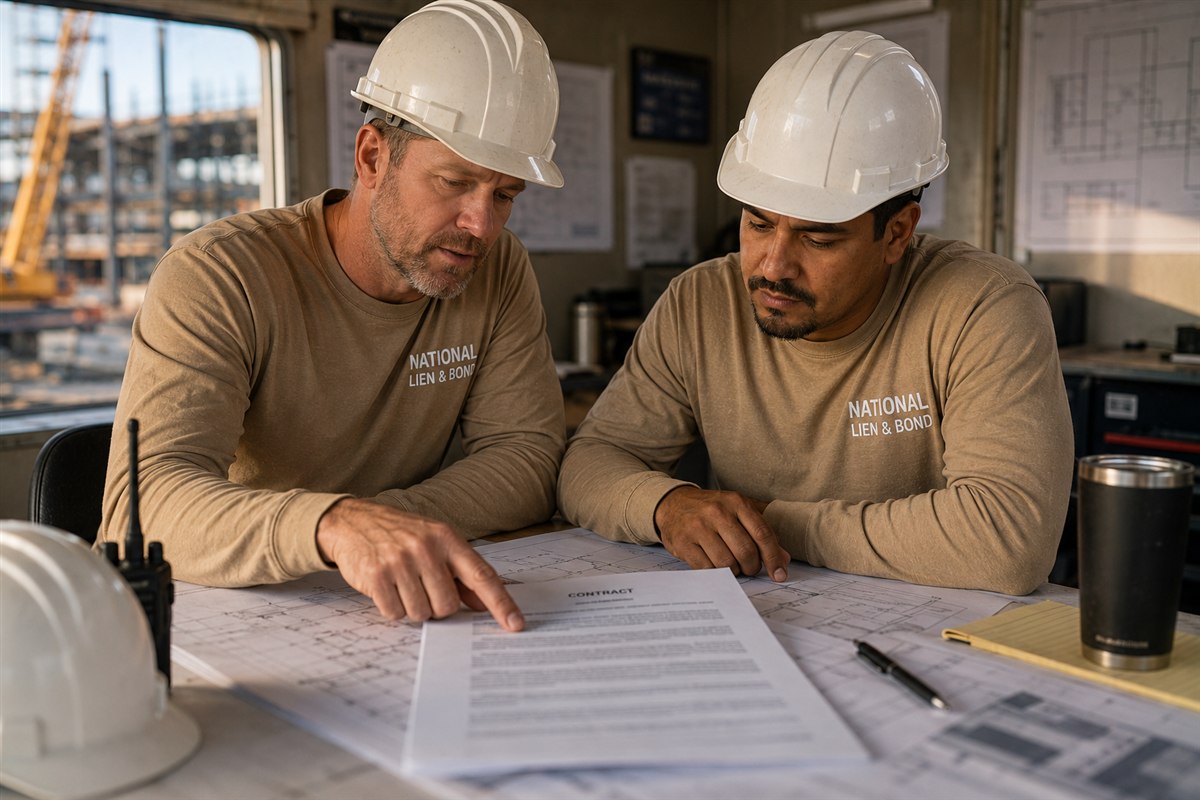
What Are Liquidated Damages in a Construction Contract?
Liquidated damages set the amount owed on a breach inside the contract itself, as a fair estimate of losses that are hard to measure. This guide explains when a liquidated damages clause is valid, the role of substantial completion, and how the amount is determined.
Read Article
Don't Say Yes Just to Get the Job
Eagerness to win a job can lead subcontractors to sign away fundamental rights. This post identifies dangerous contract clauses to watch for, from lien waivers to attorneys' fees provisions, and explains how a contract rider can level the playing field.
Read Article
Why Subcontractors Must Negotiate Contracts
Why subcontractors and suppliers should negotiate their contracts rather than sign as-is, how to spot killer clauses that shift undue liability, and which protective terms to insist on for timely payment and limited liability.
Read Article