
Don't Say Yes Just to Get the Job
We don't have to tell you that the construction business is a tough one. There is a lot of competition, every job is different, and about the only thing that stays the same is that something is constantly changing. It's great to learn that your bid on a project has been accepted, but in your eagerness to get to work it's also essential to make sure you pay close attention to the contract. If you don't, you may find yourself signing away fundamental rights that could make it very difficult to collect what you're owed if the owner or GC delays paying you.
Contract Clauses to Beware Of
There are a number of dangerous contract clauses you should watch out for. Some of these include:
- Waiver of lien or payment bond rights. Your ability to file a mechanics lien against the property you're working on or to seek payment from a payment bond is one of the most important ways you have of ensuring you get paid for the work you do or the materials you provide. Be very wary of any clause that tries to restrict or eliminate these rights.
- Waiver of the right to collect damages for delays. Delays that aren't your fault can eat deeply into your profit margin, sometimes consuming it entirely. Beware of any provision where you waive damages for delays caused by others working on the job.
- Liquidated damages clauses. These are dangerous because you may be accepting liability for damages that are someone else's fault.
- Default without notice and cure clauses. You want to receive a notice if the other party believes you are in default under your contract, and you want to have a chance to cure that default. You don't want to agree to a provision whereby you can be terminated from the job without notice or an opportunity to fix what you supposedly did wrong.
- Dispute resolution rights. You don't want to find yourself bound by the results of an arbitration or litigation or some other form of dispute resolution where you waived your right to participate as a party. If a dispute is going to affect your rights, you want to have the opportunity to be involved in the process.
- Attorneys' fees clauses. Beware of a provision that requires you to pay the other party's legal fees in the event of a dispute. These are frequently expressed as "loser pays" clauses, meaning whichever party loses the dispute pays the other side's legal fees. This can be an incentive to go to court, rather than to do the work to resolve matters without litigating.
Waiting on money for a job?
Tell us what happened and National Lien & Bond will connect you with an attorney in your state. Free consultation, no obligation.
What to Do When Presented With a Problematic Contract
It can be difficult and expensive to negotiate each problematic term out of an unfair and onerous contract. A quicker way to resolve these matters is to present the other party with a rider to their proposed contract that takes precedence over the more oppressive terms included in their contract. The rider anticipates and negates many of the problematic terms, and replaces them with fairer ones so that you're working with them on a more level playing field.
Emalfarb Law Can Help You Negotiate Your Contracts
Emalfarb Law has helped construction industry clients across the country that have been presented with difficult contract terms. Our experienced construction law attorneys understand how these types of contracts work, and we can help you efficiently negotiate your way to a fair agreement that will satisfy you and the other party. Send us an email today to learn more about how we can help you go into your projects with a fair agreement that will work for both sides.
To learn more about this and other construction contract and lien law topics, check out our video presentation "Learn How to Perfect Your Construction Lien and Get Paid on Every Project."
Waiting on money for a job?
Tell us what happened and National Lien & Bond will connect you with an attorney in your state. Free consultation, no obligation.
Related Articles
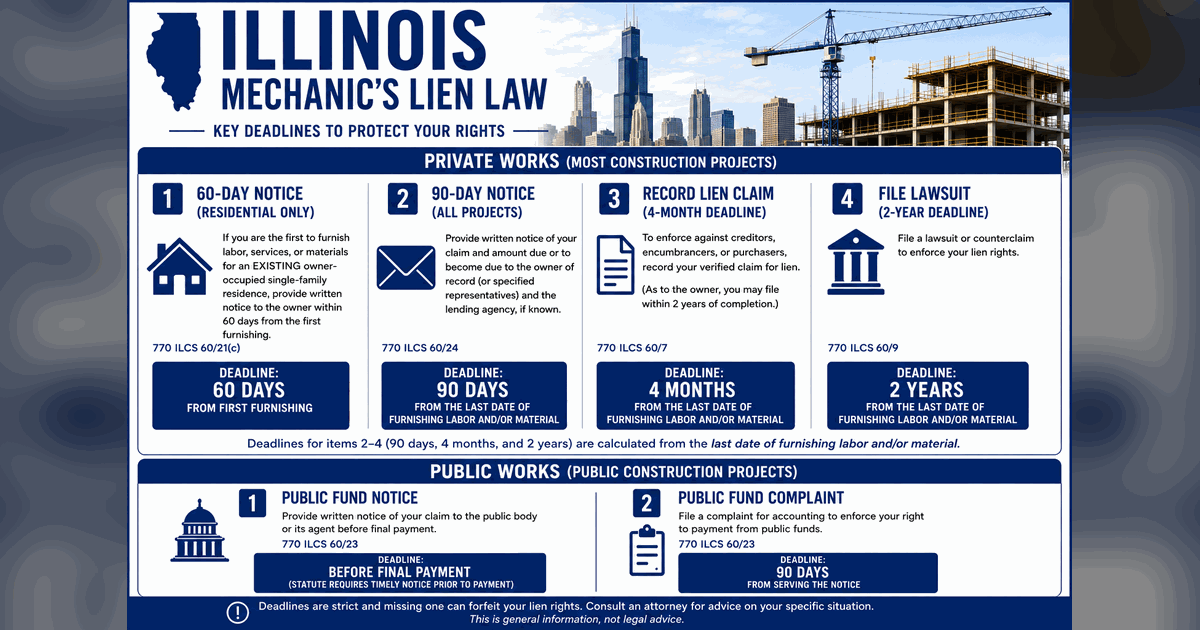
Illinois Subcontractor Lien Deadlines
Illinois subcontractors and suppliers protect payment rights by serving the 90-day notice, recording within 4 months to protect priority, and filing suit within 2 years. This guide explains the deadlines, residential traps, trust-fund issues, and public-works alternatives.
Read Article
Insurance Risks and Indemnification for Subcontractors
Explains the three forms of construction indemnification agreements, how state anti-indemnity statutes limit their enforceability, and why a Certificate of Insurance does not provide additional insured status the way an endorsement does.
Read Article
Why Subcontractors Must Negotiate Contracts
Why subcontractors and suppliers should negotiate their contracts rather than sign as-is, how to spot killer clauses that shift undue liability, and which protective terms to insist on for timely payment and limited liability.
Read Article