Why You Need a Final Payment Checklist
Many construction jobs go smoothly, the work is generally what was expected with no hidden problems, and the payments come through in a timely fashion. However, towards the end of a project and in particular if the project is large and operating on a serious budget, unresolved problems can arise and delay the final payment. This is often the payment that contains the contractor's profit. For this, and for the five reasons listed below, having a final payment checklist for each project is important.
Ensure All Parties Have Met Their Obligations
Just as the general contractor may have a set of obligations to complete at the end of a project, so too do any sub-contractors, architects or engineers overseeing the project, the project manager, any other parties. Having a checklist will confirm that not only has your business met its obligations, but everyone else has as well. The checklist should require sign-off by each party to indicate their obligations are complete and acknowledging that others have done their part.
Waiting on money for a job?
Tell us what happened and National Lien & Bond will connect you with an attorney in your state. Free consultation, no obligation.
Ensure Correct Filings
If there were mechanics liens filed during the project, the project manager will ensure that the liens have been released. This removes any encumbrances on the property for the property owner, ensures all contractors are up-to-date on their payments, and can be a useful reminder if liens were filed that should be removed. Signing off that the lien paperwork is clear provides another piece of evidence should payments become an issue in the future.
Helps Move from Substantial Completion to Final Check
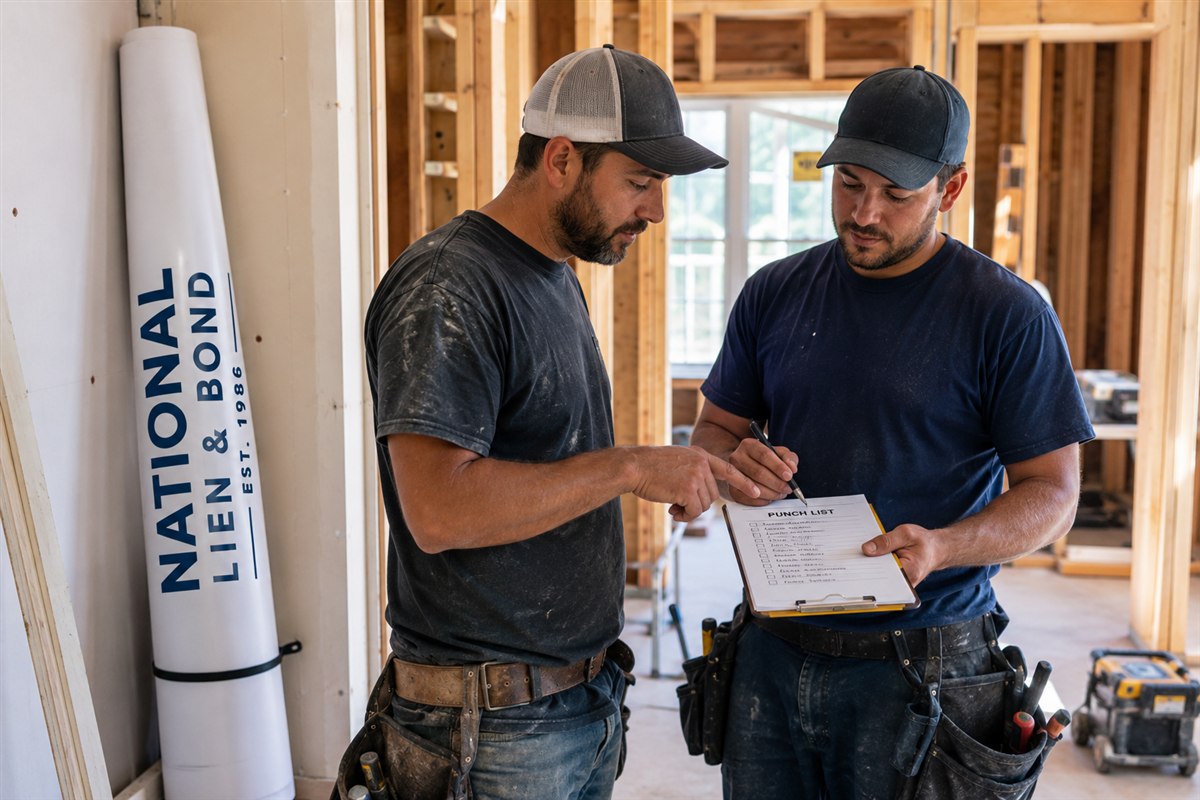
When a job is substantially complete, generally meaning that it can be used for the purpose for which it was built, then the owner and contractor generally do a formal "walk-through" and create a punch list of items that need to be handled before the owner will sign off on the project and cut the final check. With this punch list, along with your standard checklist items, you know exactly what needs to happen to get paid.
Outline the Time Frame
For items on the final payment checklist, it's generally useful to have a time frame associated with completing the step, especially if it falls within the responsibility of another party. Setting reasonable time frames for the completion of these final steps will help you anticipate when payment should arrive.
Get Approval from Finance
For complex projects, providing a summary sheet of all the work completed on top of the actual documentation, along with each signature, makes the finance administrator's job easier. When they can quickly reference that everything is done and everyone agrees, they can get your check out the door.
National Lien & Bond helps construction companies like yours manage their mechanics lien process, but we also help ensure your entire workflow is smooth, your documentation is in order, and your staff understands why each step is important. If you have projects in multiple states, the business process of tracking jobs, payments, and liens can get complex. To help, we offer an in-depth custom seminar that covers final payment checklists and much more. Learn more about our seminar below, and fill out the request form to see if your company is eligible to receive a custom lien seminar.
Waiting on money for a job?
Tell us what happened and National Lien & Bond will connect you with an attorney in your state. Free consultation, no obligation.
Related Articles

Construction Retainage: How to Get Paid
Retainage is the percentage of each payment withheld until your work is complete. This guide walks through the punch list, project documents, final invoice, and lien release affidavit you must clear to get those funds released.
Read Article
When to Sign a Lien Waiver and Why
Lien waivers and releases give up your lien rights, so timing matters. This post explains the difference between conditional and unconditional waivers, when a lien release is used, and how to negotiate waivers safely.
Read Article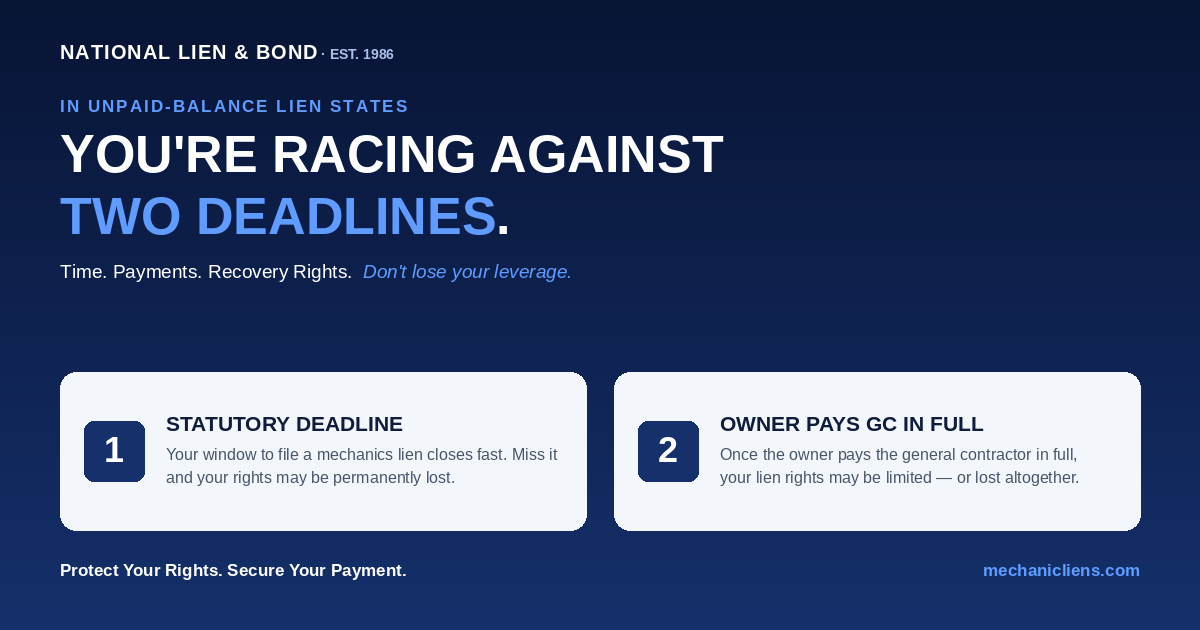
Unpaid-Balance Lien States: Two Deadlines to Track
In an unpaid-balance lien state, the calendar deadline to record your lien is only half the race. The hidden second deadline is the moment the owner finishes paying the general contractor - because that payment can shrink or erase the fund your lien attaches to. This guide explains both deadlines, why subcontractors and suppliers lose money even when they file 'on time,' and the notice-and-timing strategy that protects your leverage.
Read Article