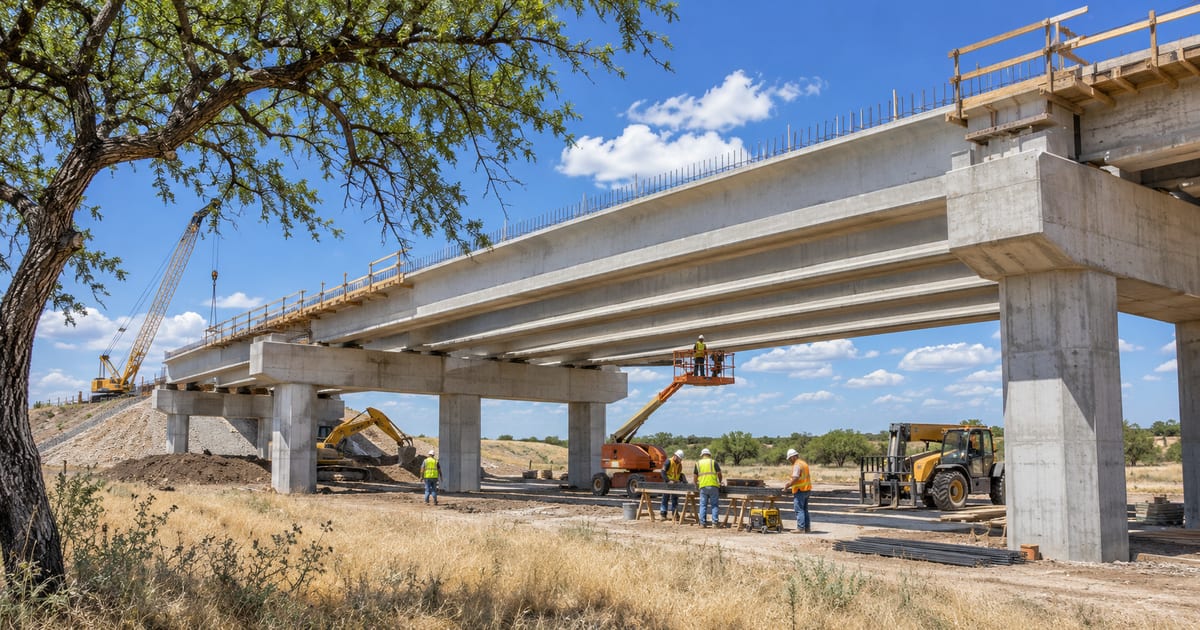
Texas Public Works Payment Bond Claims Under Government Code Chapter 2253
Texas public buildings and grounds generally are not subject to mechanics liens unless a statute expressly authorizes the lien. In place of the lien, on public work contracts covered by Chapter 2253 of the Texas Government Code and exceeding its thresholds, the governmental entity must require the prime contractor to furnish a payment bond for qualifying labor and material claimants. If the entity fails to obtain a required payment bond, Section 2253.027 may make the entity liable as if it were a surety and give claimants a lien on money due to the prime contractor. That lien is distinct from a lien against public real property. Chapter 2253 is the state's "Little Miller Act."
The remedy is valuable, but for ordinary claims the notice deadlines run month by month and are measured from each month in which work was performed or materials were delivered. A claimant that waits until the end of the job to send notice can lose most of its claim. This article walks through the requirements in order.
When a Payment Bond Is Required
Except for contracts exempt under Section 2253.002, a governmental entity entering into a public work contract must require the prime contractor to execute the applicable bonds before work begins, subject to the following thresholds:
| Bond | Required when the contract amount is |
|---|---|
| Performance bond | More than $100,000 |
| Payment bond, most governmental entities (including counties) | More than $25,000 |
| Payment bond, municipalities and joint boards created under Transportation Code Chapter 22, Subchapter D | More than $50,000 |
(Tex. Gov't Code § 2253.021(a).) The thresholds are "more than," not "at least." Federal projects in Texas are governed by the federal Miller Act, not Chapter 2253. Private Texas projects are governed by the lien statute in Property Code Chapter 53; see our guide to filing a mechanics lien in Texas.
Who Can Claim Against the Bond
The payment bond protects persons who have a direct contractual relationship with the prime contractor or with a subcontractor to supply labor or material for the public work. (Tex. Gov't Code §§ 2253.001(2), 2253.021(c).)
- Covered: subcontractors of the prime contractor; subcontractors of a subcontractor; and suppliers to the prime contractor or to a subcontractor.
- Generally not covered: a supplier to a supplier. Furnishing materials that ultimately reach the project is not enough if the claimant's customer was itself only a material supplier.
The analysis turns on the customer's role, not simply on counting tiers. A party that performs and installs contract work for the prime contractor or another subcontractor is a "subcontractor" under the statute. (Tex. Gov't Code § 2253.001(9).) Identify your customer's role at the start of the job.
Step 1: Get a Copy of the Bond
A person may request the bond documents by submitting an affidavit stating that the person supplied unpaid public work labor or material, contracted for unpaid specially fabricated material, or is being sued on a payment bond. The governmental entity must provide a certified copy of the payment bond and its attachments, the related public work contract, and the specified Texas Department of Insurance toll-free telephone number. The applicant must pay any reasonable fee set for the actual cost of preparing the copies. (Tex. Gov't Code § 2253.026.) For notices to the surety, use an address authorized by Section 2253.048(c).
Waiting on money for a job?
Tell us what happened and National Lien & Bond will connect you with an attorney in your state. Free consultation, no obligation.
Step 2: The Monthly Notices
Chapter 2253 notices are tied to each month of unpaid work. Calculate them separately for every month in which you performed labor or delivered materials.
Third-month notice: every claimant
For ordinary claims for labor performed or material delivered, the claimant must mail written notice of the claim to both the prime contractor and the surety on or before the 15th day of the third month after each month in which the labor was performed or the material was delivered. (Tex. Gov't Code § 2253.041(a), (b).)
Second-month notice: claimants without a contract with the prime
A claimant that does not have a direct contract with the prime contractor must also give the prime contractor an earlier notice, on or before the 15th day of the second month after each month in which the labor was performed or material delivered. A copy of the statement or billing sent to the subcontractor satisfies this requirement. This notice is in addition to the third-month notice, not a substitute for it. (Tex. Gov't Code § 2253.047(a), (c).)
Specially fabricated material
A claimant subject to Section 2253.047 must also notify the prime contractor of its receipt and acceptance of an order for specially fabricated material by the 15th day of the second month after receipt and acceptance of the order. (Tex. Gov't Code § 2253.047(d).)
Worked example
A second-tier electrical supplier delivers materials in March 2026 and is not paid.
- By May 15, 2026: second-month notice to the prime contractor.
- By June 15, 2026: third-month notice, with a sworn statement of account, to the prime contractor and the surety.
If the same supplier also delivered in April, the April deliveries carry their own deadlines of June 15 and July 15. Each month is a separate clock.
How notice must be sent
Notices under the subchapter must be sent by certified or registered mail, addressed as the statute requires. (Tex. Gov't Code § 2253.048.) Keep the mailing receipts and tracking records. See our guide to proof of service for notices.
Step 3: What the Claim Must Include
The third-month notice must be accompanied by a sworn statement of account stating, in substance, that the amount claimed is just and correct and that all just and lawful offsets, payments and credits known to the claimant have been allowed. The statement must include any retainage not yet due under the claimant's contract. (Tex. Gov't Code § 2253.041(c), (d).)
- With a written agreement: the claimant may enclose a copy of the agreement and a statement of completion, or of the value of partial completion, with the sworn account. (Tex. Gov't Code § 2253.042.)
- Without a written agreement: except for a claim governed by Section 2253.044, the notice must identify the party for whom the labor was performed or to whom the material was delivered, the approximate date of performance or delivery, the labor or material sufficiently for reasonable identification, and the amount due. The claimant must generally itemize the claim and include copies of documents, invoices or orders that reasonably identify the labor or material, the job, and the destination of delivery. (Tex. Gov't Code § 2253.043.)
- Multiple items for a lump sum: Section 2253.044 prescribes the notice content for these claims.
- Unit-price agreements: attaching the contractual units and unit prices, with a statement identifying completed and partially completed units, to the sworn account is a sufficient method of documenting the claim. (Tex. Gov't Code § 2253.045.)
Step 4: Retainage Claims
Retainage has its own rules.
- Early retainage notice. A claimant that contracted with a subcontractor and whose contract provides for retainage must notify the prime contractor on or before the 15th day of the second month after the month in which performance or delivery began, stating that the contract provides for retainage and generally describing it. (Tex. Gov't Code § 2253.047(b).)
- Retainage claim. Notice of a claim for unpaid retainage must be mailed to the prime contractor and the surety on or before the 90th day after final completion of the public work contract, stating the contract amount, the amount paid and the outstanding balance. No separate notice is required if the retainage was included in an earlier claim. (Tex. Gov't Code § 2253.046.)
The 90-day period runs from final completion of the prime contract, not from the end of the claimant's own work. Track the project's completion date.
Step 5: Filing Suit
When suit may be filed. If the claim is not paid before the 61st day after the notice is mailed, the claimant may sue the principal, the surety, or both. (Tex. Gov't Code § 2253.073(a).)
The deadline. Suit may not be filed after the first anniversary of the date the statutory notice of claim was mailed, subject to applicable weekend and holiday rules. (Tex. Gov't Code § 2253.078(b).) The deadline is measured from the notice, not from project completion, and a later demand letter does not restart it. Negotiations with the surety do not automatically suspend, extend or restart the filing deadline. File within the statutory period rather than rely on negotiations or possible equitable relief. See Live Systems, LLC v. Hartford Fire Insurance Co., No. 02-23-00238-CV (Tex. App. Fort Worth Jan. 18, 2024).
Venue. Suit must be brought in a county in which any part of the public work is located. (Tex. Gov't Code § 2253.077.)
Attorney's fees. In a proceeding to enforce a payment bond claim or to declare any part of a claim invalid, the court may award costs and reasonable attorney's fees that are equitable. An award is discretionary and may favor the claimant or an opposing party. Success on the claim does not automatically entitle a party to fees. (Tex. Gov't Code §§ 2253.073(b), 2253.074; C. Green Scaping, L.P. v. Westfield Insurance, 248 S.W.3d 779 (Tex. App. Fort Worth 2008).)
Did the 2021 Lien Reforms Change Chapter 2253?
No. House Bill 2237 rewrote much of the private lien statute in Property Code Chapter 53 for original contracts entered into on or after January 1, 2022. It did not change the Chapter 2253 notice or suit deadlines. A 2023 amendment to § 2253.027 addressed the governmental entity's liability in connection with required public property lease terms, not claimant notice or suit deadlines. Do not apply the private lien rules to a public bond claim.
Checklist: Texas Public Works Bond Claims
- Confirm the project is public and bonded. Identify the governmental entity and the contract amount.
- Obtain the payment bond. Record the surety's name and address and the bond number.
- Identify your customer's role. Make sure you are not a supplier to a supplier.
- Send the early retainage notice by the 15th day of the second month after performance or delivery begins, if you contract with a subcontractor and your contract has retainage.
- Calendar notices for every month of work. Second-month notice to the prime if you are not in privity; third-month notice to the prime and the surety for ordinary claims. Watch for specially fabricated material orders.
- Attach a sworn statement of account and the supporting documents.
- Mail by certified or registered mail and keep copies of every notice and enclosure with the mailing evidence.
- Track final completion for the 90-day retainage notice.
- File suit beginning on the 61st day and no later than the one-year anniversary of the statutory notice, in a county where any part of the project is located.
The Bottom Line
On a qualifying bonded Texas public work, the payment bond provides security for payment in place of the mechanics lien remedy. Calendar the deadline for each month's unpaid labor or material, send each required notice to its statutory recipients, comply with any special claim requirements, and calendar suit from the statutory notice for the particular claim. The National Lien & Bond platform calculates these deadlines and sends notices by certified mail; create an account, or use our Texas deadline calculator. If a Texas public works claim is already in dispute, contact us.
This article addresses ordinary subcontractor and supplier claims, not individual wage claims, and provides general information about Texas Government Code Chapter 2253. It is not legal advice. Requirements depend on the claimant's contract, its customer's role, and the project documents. Confirm the current statute before relying on any deadline.
Waiting on money for a job?
Tell us what happened and National Lien & Bond will connect you with an attorney in your state. Free consultation, no obligation.
Frequently Asked Questions
Can I file a mechanics lien on a Texas public project?
Generally, no. Texas public buildings and grounds ordinarily are not subject to mechanics liens unless a statute expressly authorizes one. For a qualifying bonded public work contract, an unpaid claimant may pursue the payment bond under Tex. Gov't Code Chapter 2253. Different remedies may apply if a required bond was not obtained. Tex. Gov't Code § 2253.027.
When is a payment bond required on a Texas public project?
Unless the contract is exempt under § 2253.002, when the prime contract is more than $25,000, or more than $50,000 for a municipality or a qualifying joint board. A performance bond is required when the contract is more than $100,000. Tex. Gov't Code § 2253.021(a).
What is the deadline to give notice of a Texas public works bond claim?
For ordinary claims for labor performed or material delivered, the claimant must mail notice to the prime contractor and the surety by the 15th day of the third month after each month in which the work was performed or the material delivered. A claimant without a contract with the prime must also notify the prime by the 15th day of the second month. Retainage and specially fabricated material have separate rules. Tex. Gov't Code §§ 2253.041, 2253.046, 2253.047.
Can a supplier to a supplier make a Chapter 2253 claim?
Generally no. The bond protects persons in a direct contractual relationship with the prime contractor or a subcontractor. A supplier whose customer was only a material supplier is generally not covered. Tex. Gov't Code § 2253.021(c).
How long do I have to sue on a Texas payment bond?
Suit may be filed beginning on the 61st day after the notice of claim was mailed if the claim remains unpaid, and may not be filed after the first anniversary of the mailing, subject to weekend and holiday rules. Tex. Gov't Code §§ 2253.073, 2253.078.
When is the retainage claim notice due?
On or before the 90th day after final completion of the public work contract, mailed to the prime contractor and the surety. Tex. Gov't Code § 2253.046.
Sources
- 1.Tex. Gov't Code § 2253.001 (Definitions); § 2253.002 (Exemption).
- 2.Tex. Gov't Code § 2253.021 (Performance and payment bonds required).
- 3.Tex. Gov't Code § 2253.026 (Copy of payment bond and contract).
- 4.Tex. Gov't Code § 2253.027 (Liability of governmental entity).
- 5.Tex. Gov't Code §§ 2253.041-2253.045 (Notice of claim; contents).
- 6.Tex. Gov't Code § 2253.046 (Notice of claim for retainage).
- 7.Tex. Gov't Code § 2253.047 (Additional notice for claimants without a direct contract with the prime contractor).
- 8.Tex. Gov't Code § 2253.048 (Mailing notice).
- 9.Tex. Gov't Code §§ 2253.073, 2253.074, 2253.077, 2253.078 (Suit, fees, venue and limitations).
- 10.H.B. 2237, 87th Leg., R.S. (2021).
- 11.Live Systems, LLC v. Hartford Fire Insurance Co., No. 02-23-00238-CV (Tex. App. Fort Worth Jan. 18, 2024).
- 12.C. Green Scaping, L.P. v. Westfield Insurance, 248 S.W.3d 779 (Tex. App. Fort Worth 2008).
Related Articles

Missed a California Public Works Stop Notice? Your Payment Bond Claim May Still Be Alive
On a California public works project, the stop payment notice and the payment bond claim run on separate clocks. A subcontractor that missed the 30-day stop notice deadline may still have six more months to sue on the bond. Here is how the dates work, with a worked public school example.
Read Article
Miller Act Deadlines for Federal Project Payment
You cannot lien a federal courthouse, an Army base, or a VA hospital. On a federal construction project the payment bond is your security, and two Miller Act deadlines decide whether you collect: a 90-day notice and a one-year suit window.
Read Article
How to Enforce Little Miller Act Claims in Washington State
How subcontractors, sub-subcontractors, and suppliers preserve and enforce a Washington State Little Miller Act claim on public works over $150,000, including the 10-day preliminary notice, the 30-day notice of claim, and bond-driven suit deadlines.
Read Article