
Mechanics Liens and Standard Terms for Subs and Suppliers
A mechanics or construction lien is an entitlement to a hold on real property or project funds until an outstanding amount owing a contractor or supplier is paid.
In difficult economic times or a failed project credit risk is around the corner for every construction business. Subs and suppliers frequently find that a General Contractor or Owner is unwilling or unable to pay monies outstanding on a project, leaving the sub-trades and suppliers with an unpaid bill carrying the risk you didn't expect to take when you signed your contract. With legal fees, interest and loss of cash flow quickly adding up, subs and suppliers must look for an effective way to deal with a project's payment default. A well drafted contract with favorable standard terms and conditions and enforcing your mechanics lien rights from the inception of your contract can often provide a quick and easy solution for recouping payment and/or securing your extension of credit on every project.
Where payment is outstanding, if the sub or supplier protected its statutory steps and your contract includes favorable terms and conditions your compliance with the lien statute and proper contract administration is your trump card. Liens are only as good as your contract, entitling you to retain a superior claim to project finds, real property and/or payment bond rights many times in front of any other creditor's rights. Most General Contractors include onerous standard terms and conditions to limit or restrict a sub and suppliers contractual and statutory lien to and put any sums owed to the subs and suppliers at risk.
Waiting on money for a job?
Tell us what happened and National Lien & Bond will connect you with an attorney in your state. Free consultation, no obligation.
What is a lien?
A lien is an entitlement to hold goods until an outstanding amount is paid.
A well written contract with favorable clauses to the sub/supplier and full compliance with the state's mechanics lien law will make it clear that the Sub and Supplier is entitled to exercise a lien over its work and delivery of materials for any amounts owed by the Sub or Supplier concerned, whether those amounts are owed for charges relating to the work and/or delivery of materials in question, or previous work and delivery of materials. This can be important. It is not unusual for a General Contractor or Owner to have released monies for earlier work and delivery of materials s without the funds being paid to those parties who actually furnished the paid for labor and materials, and instead funds were diverted to others receiving payment. Too often, before subsequently realizing the need to exercise a lien to protect work and delivery of materials to secure payment proper compliance with good business practice and state law is overlooked. If the Sub and Supplier's contract clause are poorly drafted they can limit the Sub and Supplier's ability to exercise a lien to get paid for their work and delivery of materials.
An important point to note is that a Sub and Supplier's lien is dependent on complying with state statutes for pre-lien and recording deadlines
If a Sub and Supplier fails to timely comply, the lien is lost. This does not mean that the Sub and Supplier must personally keep the goods in hand: the Sub and Supplier will not lose its lien by keeping the goods, under its direction, and withholds shipment until paid but suspending performance is risky and should only be put into action with seek of legal counsel.
A situation that sometimes arises is where, partway through the project, the Sub and Supplier learns that they are not going to be paid. Can the Sub and Supplier exercise a lien when the Sub and Supplier hasn't yet completed the work? The position is not always clear and will depend upon the particular contractual and commercial arrangements, particularly the termination and default clauses as we discuss in NLB's Lien Law Series but the answer may well be "no" so this is an important point to watch and seek legal assistance.
Can I Lien Every Project?
There is legislation in each state providing lien laws, but the legislation typically involves deadlines periods and a series of notice and recording obligations and action in court to enforce your lien, and consequently relying upon the favorable contractual terms and managing your legal risk is often inconvenient and uncommercial. However the statutory procedures do not over-ride existing contractual rights. Consequently most subs and suppliers already have - in their terms and conditions - the tools to help themselves. The procedures for exercising the power of getting paid will ultimately be determined by the specific wording of the contract, but can and typically include the right to lien enhances your leverage and ability to negotiate.
NLB Construction Law Network of Lawyers and Lien Providers Developed the Negotiation Formula, Power + Transaction= Payment
When negotiating for payment your contractual rights represent your transaction and exercising a power of the lien is the power behind or leverage to get paid, it is imperative to insure that both the scope of the standard terms in your agreement are drafted in the sub or supplier's favor. Comply with Your Lien Law Deadlines. Before being able to actually exercise your power of negotiation the sub and supplier must familiarize themselves with the standard terms of the contract, and ensure they meet any requirements including any time periods, notice requirements and other procedures. If these requirements are restrictive subs and suppliers should consider amending their terms and conditions for future transactions, and making these amendments as standard terms and conditions well known to their clients.
Waiting on money for a job?
Tell us what happened and National Lien & Bond will connect you with an attorney in your state. Free consultation, no obligation.
Related Articles
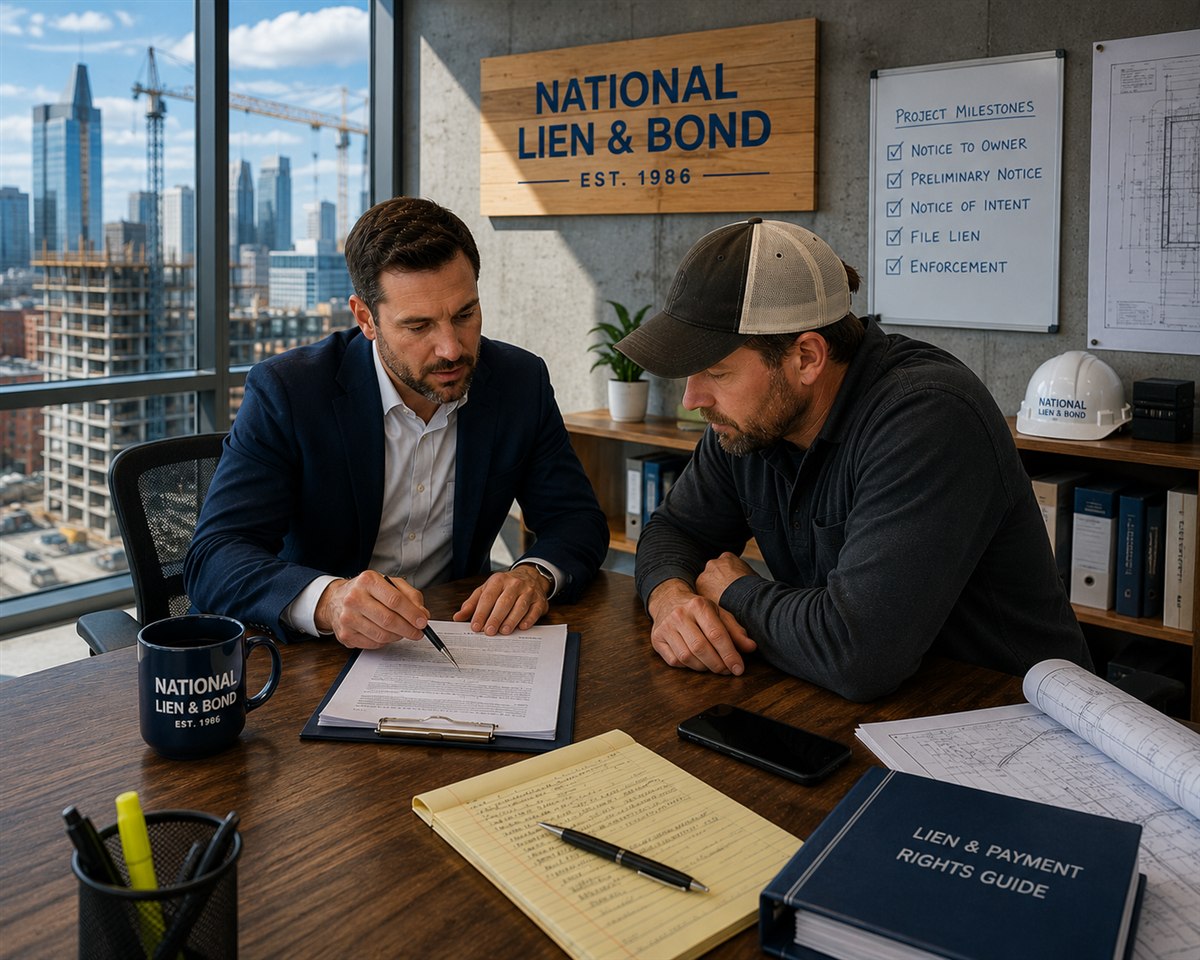
Using a Lien Compliance Program to Get Paid
A lien compliance program is a system for tracking what you must do on every job to preserve your payment rights. This post explains how it works, why state and project differences matter, and why diligent use is the key to getting paid.
Read Article
The Negotiation Equation - Your Key to Payment
Emalfarb Law's Negotiation Equation reduces payment leverage to a simple formula: Transaction plus Power equals Payment. This post explains each variable and how a strong contract combined with preserved legal rights puts you in a better position to collect.
Read Article
Filing a Lien After Bankruptcy: Supplier Remedies
When a property owner files for bankruptcy, a supplier or subcontractor can still file a mechanics lien and recover. This post covers the secured-debt position, the automatic stay, and the steps to protect lien rights.
Read Article