Performance Bonds on Public Construction Projects
When it comes to schedules and timelines for construction projects, those with experience will agree there are too many possibilities of curve balls that just cannot be accounted for. However, if theres one thing all players involved expect, it's to get paid. For large scale commercial jobs, Surety bonds provide you with the assurance of getting paid.
There are generally two types of relevant bonds: payment bonds and performance bonds.
Performance bonds are used by the project owner to file a claim against the payment bond if needed. This serves as assurance that the general contractor will complete the contract on time. If the subcontractors and the material suppliers don't get paid, they can file a claim against the payment. While you can't file a mechanics lien on a public project, you can file a bond claim and in many states a lien on public funds.
Waiting on money for a job?
Tell us what happened and National Lien & Bond will connect you with an attorney in your state. Free consultation, no obligation.
Performance Bond Details
A performance bond is a surety that binds the general contractor and the governmental entity (which owns the project) to the project's details and its timely completion. The performance bond ensures that the contractor performs as specified in the construction contract. If the contractor fails to do so, the project owner can submit a claim against the bond. In the end, the bond holder (often an arm of an insurance company that specializes in construction bonds) assumes responsibility for seeing the project to completion or alternatively, can payout the value of the bond.
Requirements vary between federal, state, and local governments. The surety company can be involved and tasked to pressure both sides towards completion. The surety company has a vested interest in ensuring the work is performed to specifications, and that the subcontractors and suppliers are paid on time.
How Performance Bonds Benefit Contractors
The cost of a performance bonds vary, but generally represent a fraction of the value of the contract. If a performance bond is required, it can generally and easily be obtained by working with a surety company. Once a company's bid has been selected, that company obtains bonds. Generally, you obtain both a performance and a payment bond at the same time so that both sides of a particular transaction, as well as all subcontractors and suppliers involved, are protected in the event of a problem.
While the obvious benefits of performance bonds might be for the owner of the project, they also protect subcontractors and ensure work carries on regardless of any issues the general contractor may encounter. Knowing that a third party protects the work and keeps it on schedule ensures a cash flow to those further down the contracting line.
If you'd like to learn more about construction bonds, or you're in need for specialized advice, reach out to the National Lien and Bond team. With dedicated expertise in the construction industry all over the USA, our team can quickly address and respond to your concerns. In addition, they offer the industry's most highly informative lien seminars to ensure your entire management team is up-to-date about mechanics liens and construction bonds.
Waiting on money for a job?
Tell us what happened and National Lien & Bond will connect you with an attorney in your state. Free consultation, no obligation.
Related Articles
Private Project Performance Bonds VS Mechanics Lien
Payment and performance bonds aren't just for public work. This guide explains how private project bonds operate, what the surety does when a contractor fails to perform or pay, and how a bond claim compares to filing a state mechanics lien.
Read Article
What Is a Surety Bond and How Does It Work?
A surety bond sets aside funds or resources to serve as security on a construction project. This guide explains payment and performance bonds, when they are required, and how to make a bond claim if payment is not made.
Read Article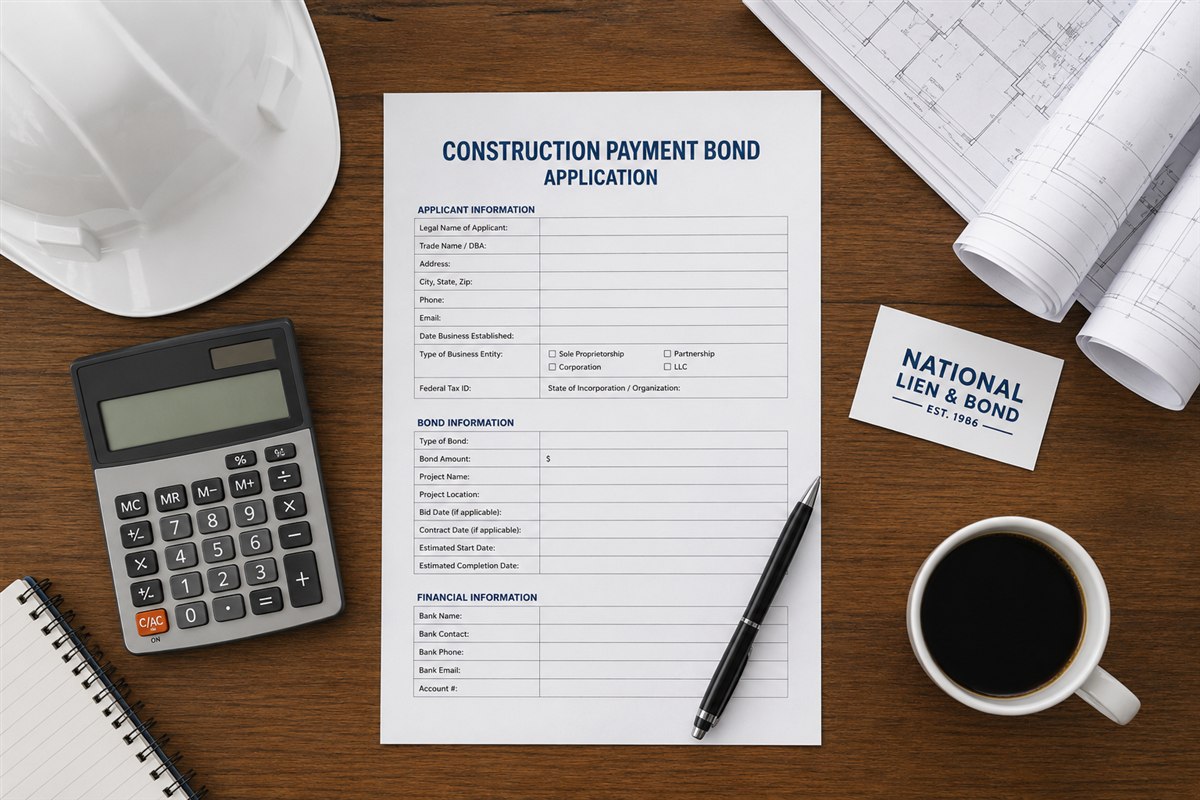
What are Payment and Performance Bonds?
Payment and performance bonds protect contractors and suppliers on government and many private projects without a mechanics lien. This guide explains how each bond works, the Miller Act and Little Miller Act requirements, and how bond claims are filed.
Read Article